The short version
- Take a pea-sized amount with a clean, dry spoon or spatula and put it on your brush. Keep water out of the jar.
- It won’t foam like supermarket toothpaste. That’s because there’s no SLS, the foaming agent in most tubes, and it cleans just as well without the bubbles.
- Brush for two minutes, twice a day, then spit and don’t rinse.
- Our children’s toothpaste and our mouthwash are fluoride-free. Read the note on fluoride below before you choose.
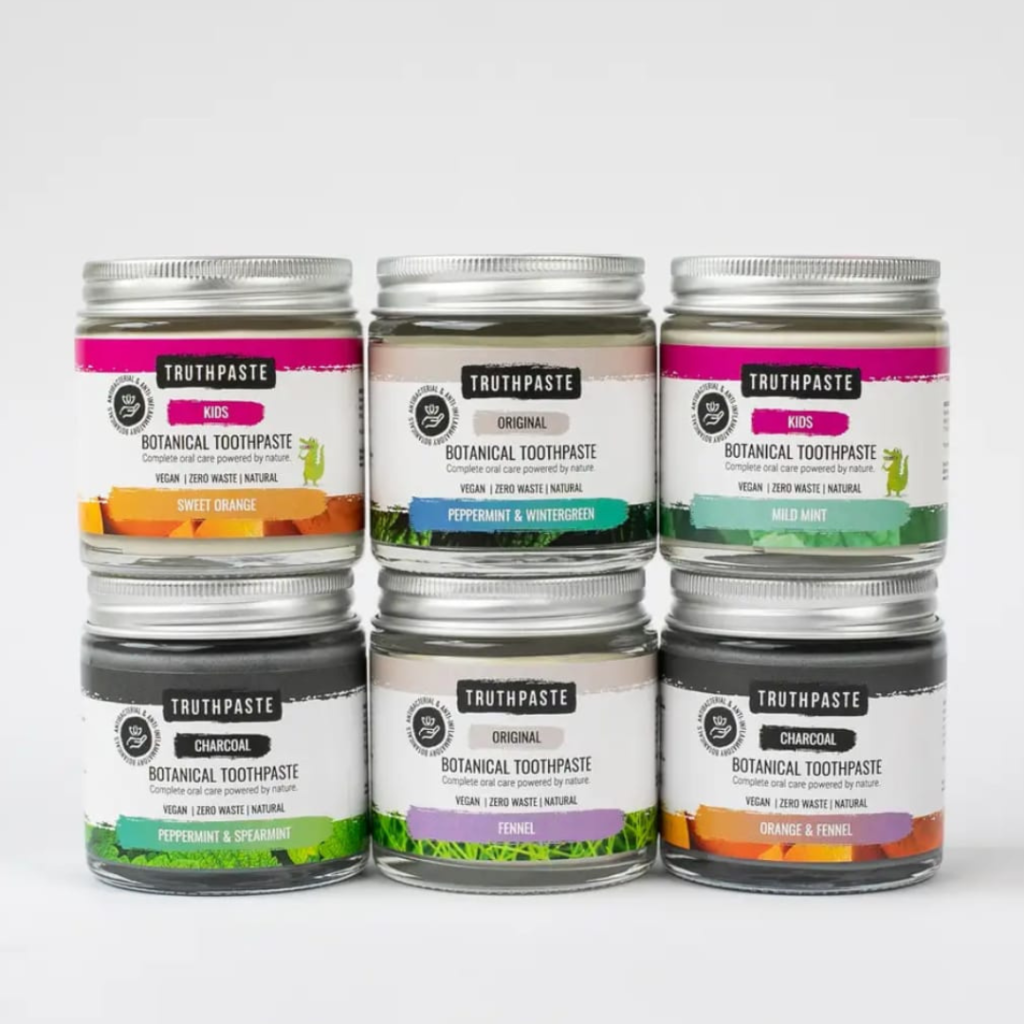
Toothpaste in a glass jar is one of the easiest swaps you can make in the bathroom, and Truthpaste’s adult toothpaste is the best seller in our whole shop. The first time you open a jar, though, it can feel a bit unfamiliar. This guide covers how to use it, why it feels different from a tube, and what’s actually in it.
Why toothpaste in a jar?
Most toothpaste tubes are made from layers of plastic, often with aluminium bonded in between. Those layers are hard to separate, which is why many UK household recycling collections still don’t take them, and billions of tubes end up in landfill every year around the world.
Truthpaste comes in a glass jar with a metal lid. Rinse it out when it’s empty and both parts can go in your household recycling, or keep the jar for something else. It’s one of the swaps in our guide to plastic-free bathroom swaps that actually work.
How to use toothpaste from a jar
- Scoop, don’t dip. Use a small clean, dry spoon or spatula to take a pea-sized amount and put it on your brush. Some people dab a dry brush straight onto the paste, which is fine if the jar is only yours and the brush is completely dry.
- Keep water out. Natural pastes have little or no synthetic preservative, so the less water and toothbrush contact the jar gets, the better it keeps. Put the lid back on straight away.
- Brush for two minutes, twice a day. Last thing at night and one other time during the day, the same as with any toothpaste.
- Spit, don’t rinse. UK dental guidance recommends spitting out after brushing rather than rinsing with water, so what’s left of the toothpaste stays on your teeth for longer.
Pastes made with plant oils can soften on a hot day and firm up in a cold bathroom. Both are normal. Give a firm paste a quick stir with your spoon.
Why doesn’t it foam?
The thick foam you get from most toothpastes comes from sodium lauryl sulfate, or SLS. It’s a detergent, and it’s there mainly because people expect foam. Foam isn’t what cleans your teeth: brushing does, by physically removing plaque from every surface.
Some people also find SLS irritates the inside of their mouth. A 2022 scoping review of the research linked SLS in toothpaste to irritation and, in some people, mouth ulcers, though the evidence that switching helps with recurring ulcers is still limited. We cover the full story in what SLS is and who might want to avoid it.
What’s in it, and what’s left out
| Product | Made with | Made without |
|---|---|---|
| Adult All-Natural Toothpaste | Blends of organic oils | SLS, triclosan, titanium dioxide, nano-particles, palm oil |
| Children’s Natural Toothpaste | Certified organic coconut, calendula and aloe vera | Fluoride, SLS, triclosan, titanium dioxide, palm oil |
| Strong Mint Probiotic Mouthwash | Organic aloe vera and organic peppermint oil | Alcohol, fluoride, SLS, palm oil |
Every product page lists the full ingredients, so you can check anything you’re unsure about.
A straight answer on fluoride
We sell fluoride-free options because many customers ask for them. We’d still rather you chose with the facts in front of you.
The UK’s official guidance for dental teams, Delivering Better Oral Health, recommends fluoride toothpaste for almost everyone, because fluoride helps protect teeth against decay:
| Age | Fluoride the guidance recommends | How much toothpaste |
|---|---|---|
| Under 3 | At least 1,000ppm | A smear |
| 3 to 6 | At least 1,000ppm | A pea-sized amount |
| 7 and over, and adults | 1,350 to 1,500ppm | A pea-sized amount |
Tell your dentist, especially for children, and ask whether a fluoride varnish at check-ups makes sense. Keep sugary food and drinks to mealtimes, and keep up regular appointments.
When to use mouthwash
Use mouthwash at a different time from brushing, for example after lunch. If you rinse straight after brushing, you wash away the toothpaste that would otherwise stay on your teeth. Our Strong Mint Probiotic Mouthwash is alcohol-free, so it doesn’t have the burn of many shop mouthwashes.
Brushing with children
- Help with or watch their brushing until they’re at least 7. Most children can’t brush every surface properly on their own before then.
- Use a smear under 3 and a pea-sized amount from 3, and teach them to spit rather than swallow.
- Let them pick their own brush. It sounds small, but it makes bedtime brushing a lot less of a battle.
Shop the guide
-
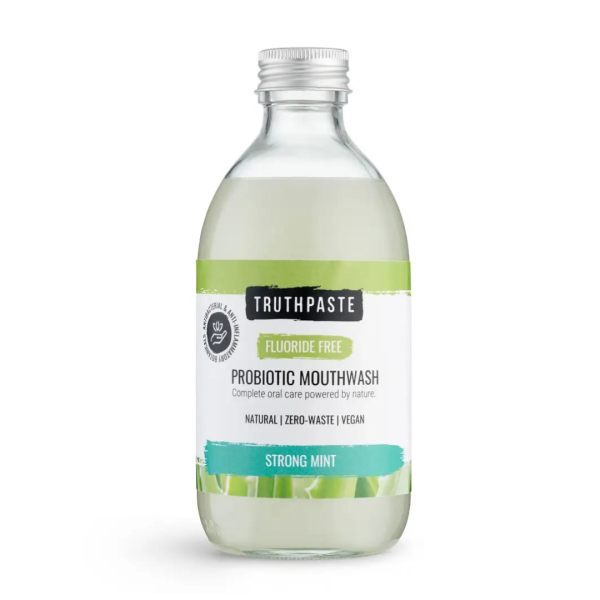
Strong Mint Probiotic Mouthwash, Fluoride-Free
Truthpaste -
Best seller
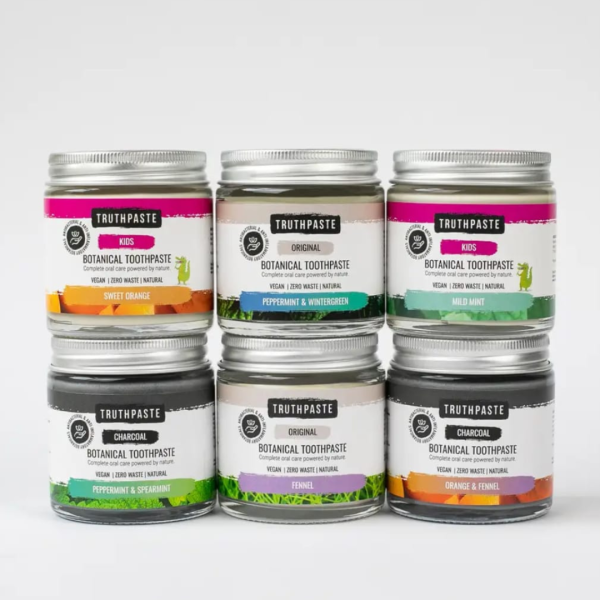
Adult All-Natural Toothpaste
4 flavours£10.00 Choose flavour This product has multiple variants. The options may be chosen on the product page -
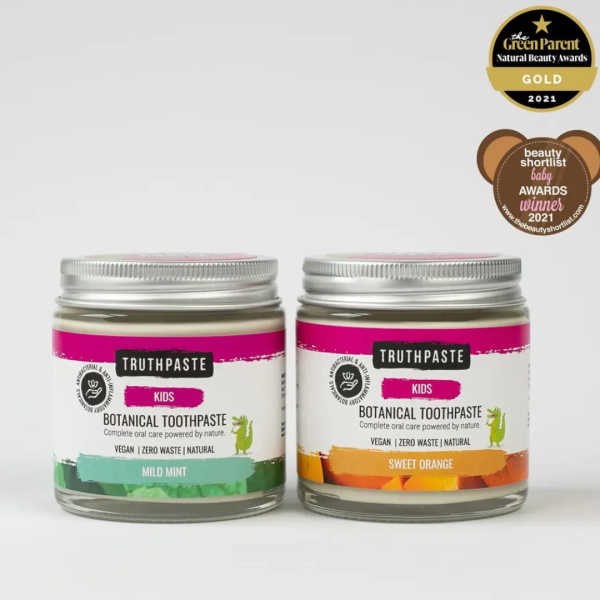
Children's Natural Toothpaste
Mild Mint · Sweet Orange£10.00 Choose flavour This product has multiple variants. The options may be chosen on the product page
See everything in oral care.
Questions we get asked
Can I use it with an electric toothbrush?
Yes. Put a pea-sized amount on the brush head with your spoon or spatula, place the brush on your teeth, then switch it on so it doesn’t spatter.
Is it hygienic to share a jar?
Yes, as long as everyone uses a clean spoon or spatula rather than dipping their own brush. Many families keep a small spoon next to the jar.
Can I recycle the jar?
Yes. Rinse it out and put the glass jar and metal lid in your household recycling, or reuse the jar.
Why does it cost more than supermarket toothpaste?
It’s made in small batches with organic ingredients and packed in glass. A little goes a long way, since you only need a pea-sized amount.